



Everything you need to know about turtle hatching season in Queensland

GUIDE

A couple watching tiny turtles hatch on the beach
Sarah Bristow

By Sarah Bristow

Published 1 day ago

Places to see turtles hatching | What to know about hatchlings | Learn more

Summer in Queensland isn’t just about reef trips and beach days; it’s also the season when turtles take over our coastline, from nesting mums to thousands of hatchlings making their moonlit dash to the sea.

When to see turtles in Queensland

  • Nesting season: November – January
  • Hatching season: January – March

Why Queensland is turtle central

Six of the world’s seven sea turtle species call Queensland home, with the Great Barrier Reef as their ultimate hangout. From the Southern Reef islands to Bundaberg’s famous Mon Repos, our beaches aren’t just sandy stretches; they’re global turtle nurseries.

The magic of hatching season

Picture this: thousands of tiny turtles erupting from the sand under moonlight, flippers going at full speed as they race to the sea. It’s chaotic, it’s adorable, and it’s one of nature’s best live shows.

Pro tip: don’t just wait for hatching. Nesting season is just as awe-inspiring. Watching a giant loggerhead haul herself onto the very same beach she hatched on decades earlier? That’s pure natural GPS wizardry.

How it works

  • Females lay eggs in summer’s hot sand (Nov–Jan).
  • Eggs incubate for about six to eight weeks.
  • Hatchlings emerge (Jan–Mar) and make their moonlit dash to the water.

Book early to see the turtles

Turtle encounters are popular, and spots are limited. If you want a front-row view at places like Mon Repos Turtle Centre, you’ll need to book early — tickets usually go on sale in September and sell fast.

Be part of it (responsibly)

You can see turtles up close with guided tours at Mon Repos Turtle Centre, or visit reef islands like Heron Island and Lady Elliot Island, where the action unfolds on the beach just metres from your stay.

Remember: always follow ranger advice, keep lights low, and let the turtles do their thing.

Turtle Encounter Tour with a Park Ranger to watch the turtle hatchings cross Mon Repos beach at night, Mon Repos Turtle Centre, Bundaberg

Mon Repos Turtle Centre, Bundaberg

.

Where are the best places to see turtles hatching?

Turtle Encounter Tour with a Park Ranger to see female turtles laying their eggs at night, at Mon Repos Turtle Centre Bundaberg

Mon Repos Turtle Centre, Bundaberg

Queensland’s got front-row seats to hatching season, thanks to the Great Barrier Reef and its stretch of secluded sandy beaches, just how turtle mums like it. The northern and southern tips of the reef are especially popular spots when it’s time to welcome the next generation.

Southern Great Barrier Reef

Heron Island turtle hatchling season | By @Aleksmutated

  • Mon Repos - Neighbouring Bundaberg you’ll find Mon Repos, a hatching hot spot supporting the largest population of nesting marine loggerhead turtles in the South Pacific. It’s also the site of the new multi-million dollar Mon Repos Turtle Centre; an information centre, conservation and long-term research monitoring centre in one. Plan well in advance as the nighttime guided tours from the Centre can book out for the season quickly.
  • Lady Elliot Island - Three species of sea turtles frequent Lady Elliot Island: the hawksbill, green and loggerhead turtles. Aside from leading hatching viewing expeditions, the island also hosts a Reef Education Centre for educating about marine turtle research and conservation.
  • Lady Musgrave Island (main image Lady Musgrave Experience) - The protected lagoon of Lady Musgrave is a favourite for snorkellers, but during nesting season it’s a prime location to glimpse green, loggerhead and even the endangered hawksbill turtles set forth on their journey out to sea.
  • Heron Island - Fellow diving favourite Heron Island is on the border of the southern stretch of the reef. Green and loggerhead turtles flock to this coral cay to lay eggs once the time comes.
  • Great Keppel Island - The 17 sandy beaches of Great Keppel Island mean that our shelled friends have plenty of birthing suites to choose from. The island is a particular favourite for the flatback turtle, with the island an important breeding rookery for the species.

Cairns & Great Barrier Reef

  • Green Island - As its name suggests, Green Island attracts its namesake turtle in their droves. Conveniently, this coral cay national park sits close to Cairns and is an easy day trip or overnighter with resort accommodation. 
  • Fitzroy Island - A sanctuary for sick and injured sea turtles can be found on Fitzroy Island, where the Cairns Turtle Rehabilitation Centre (CTRC) is based. The volunteer-operated, non-profit organisation expanded from the mainland to the island in 2013 due to growing demand - and visitors can take a tour or even lend a helping hand. 

What should you know about hatchlings before you visit?

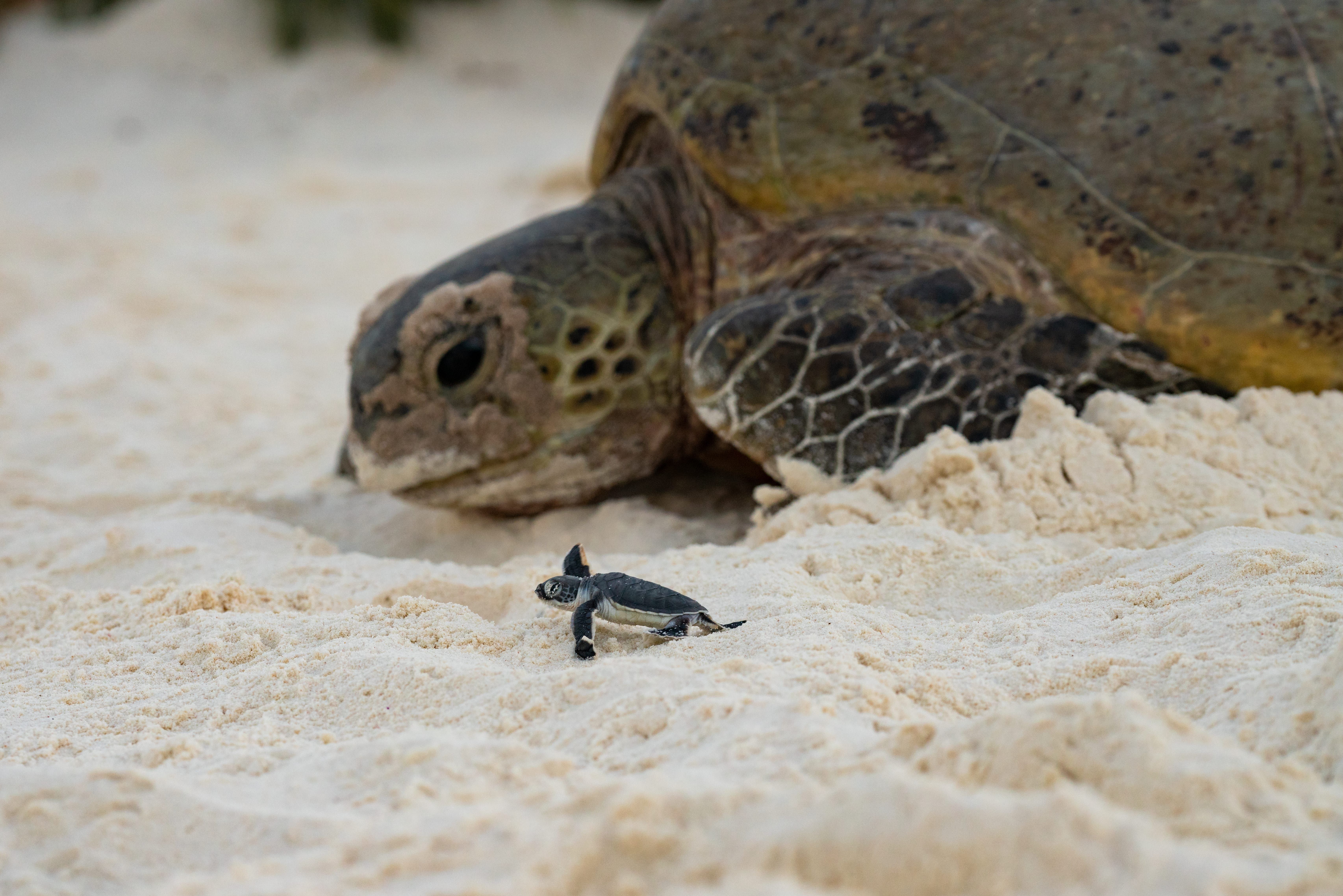
Baby turtle hatchling and adult turtle in the sand on Wilson Island

Wilson Island, Southern Great Barrier Reef

  • Newborn turtles weigh just 15–30 grams and are just 5-7cm long. That's smaller than a Tim Tam (and way cuter).
  • While buried in the sand, hatchlings lock in their location using Earth’s magnetic field. Basically building their own internal GPS to help them return home decades later.
  • It’s a tough world out there: only 1 in 1,000 hatchlings makes it to breeding age (around 30!). But if they do, they can live for 50 to 80 years.
  • Plan your visit for after dark. Night-time is prime hatching hour thansk to cooler temps, fewer predators, and a better shot at seeing the little legends in action.
  • Leave your torch at home. Hatchlings follow natural light on the horizon to find the ocean, so let moonlight lead the way.

Want to learn more about baby turtles and hatching season?

Two children snorkel next to a turtle at Heron Island

Heron Island, Southern Great Barrier Reef

  • Take a look at our collection of surprising sea turtle facts.
  • Plot your trip with our hatchling hot spot guide to the Southern Great Barrier Reef.
  • Use our Great Barrier Reef animal guide to show you where you can swim with the gentle giants.
  • Learn more about Lady Elliot Island’s status as a turtle sanctuary (among other marine life).

Love what you're reading?

Don’t stop now. Sign up for more Queensland inspo, local secrets and exclusive deals – straight to your inbox. No fluff, just the good stuff.

Sign up now
