
Where to see wildflowers in Queensland

LIST

Danielle	 Reckless

By Danielle Reckless

The most beautiful things in life are often those that are fleeting. Wildflower blooms are just that: captivating, colourful, and controllable only by the whims of the weather – what’s here today may not be tomorrow, or next week. It feels like you’re stealing precious moments with pure nature.

Whether you’re a photographer, a hiker, an adventurer, or simply seeking some fresh country air and a frolic among native blooms, here’s where to find wildflowers in Queensland – and when.

Discover island wildflowers on Minjerribah (North Stradbroke Island)

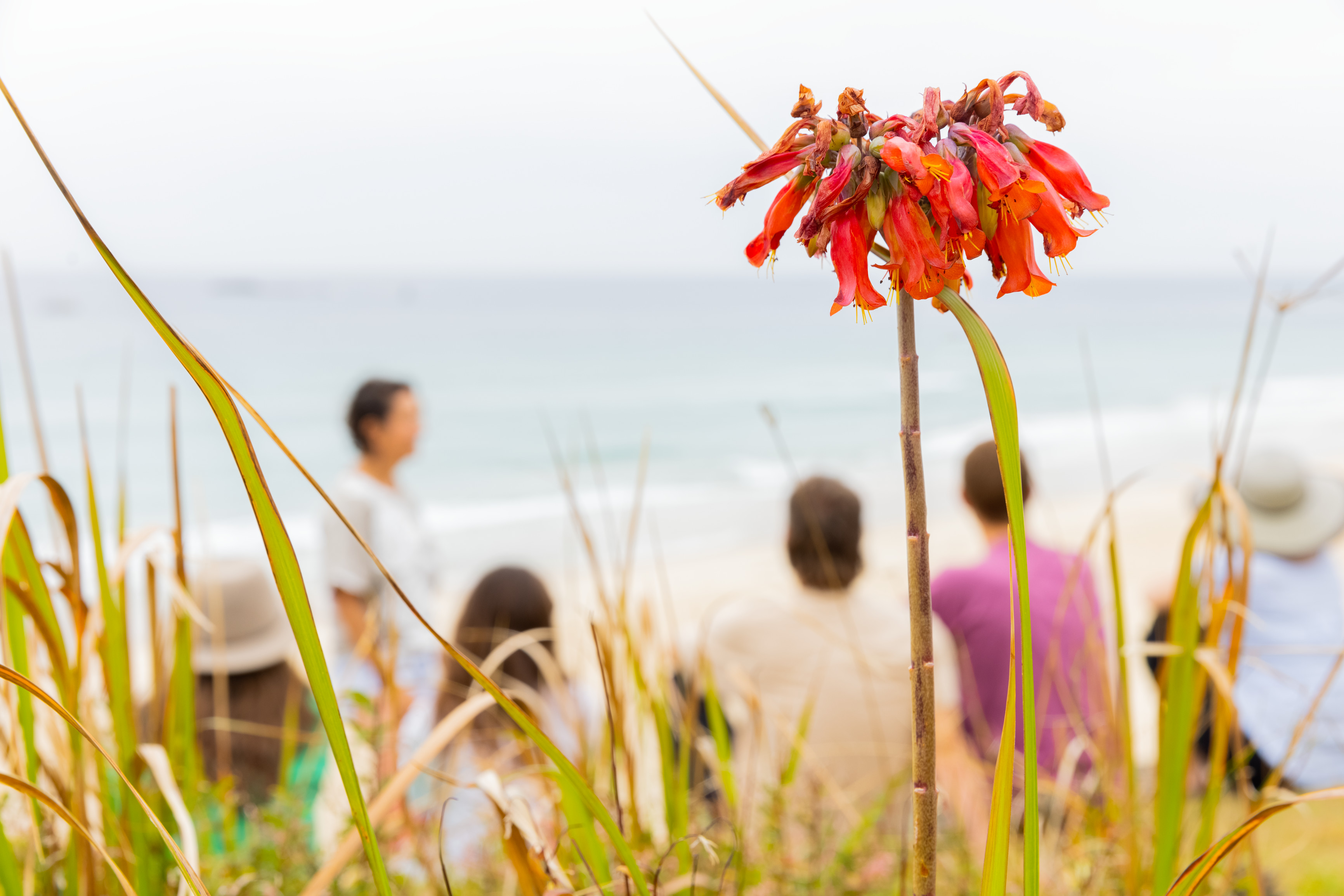
Wildflowers by the beach, Minjerribah (North Stradbroke Island)

Minjerribah’s natural beauty shines year-round, but it feels extra special during the magnificent wildflower season. Typically from August – early October, the landscape erupts in a kaleidoscope of colour, from fuchsia pink forest boronia to vibrant native iris, devil’s rice, wedding bush, woolly aotus, wallum banksia, dogwood and so much more.  

It’s particularly vibrant along the beaches and bush, where frontal dunes make way for bright yellow guinea flower, mauve goat’s foot, and purple daisy-like pigface. The island’s drier high dunes, lined with eucalypts and scribbly gums, are home to many wattle and acacia species, along with wallum banksias and coastal banksias which attract nectar-eating birds and insects when flowering.

Spring flowers also dot the bushland surrounding Bummiera (Brown Lake), while a drive along East Coast Road will give you a front row seat to blooming wattles.

While it’s easy to navigate your own wildflower tour on Minjerribah, local company Yura Tours offers insight into local flora and fauna through an Indigenous lens, sharing their cultural knowledge and stories with you.

How to get here: Book your ticket on Sealink’s passenger and vehicle ferry or the passenger-only Stradbroke Flyer. Both depart Cleveland and arrive at Dunwich.

Stay a while: Wander North Gorge Walk for the island’s most spectacular coastal views, and the chance to spot turtles, rays and dugongs in the waters below – along with humpback whales during migration. From where to eat to where to stay, here’s how to spend 48 hours on Minjerribah.

Seek out sunflowers through the Scenic Rim and Queensland Country 

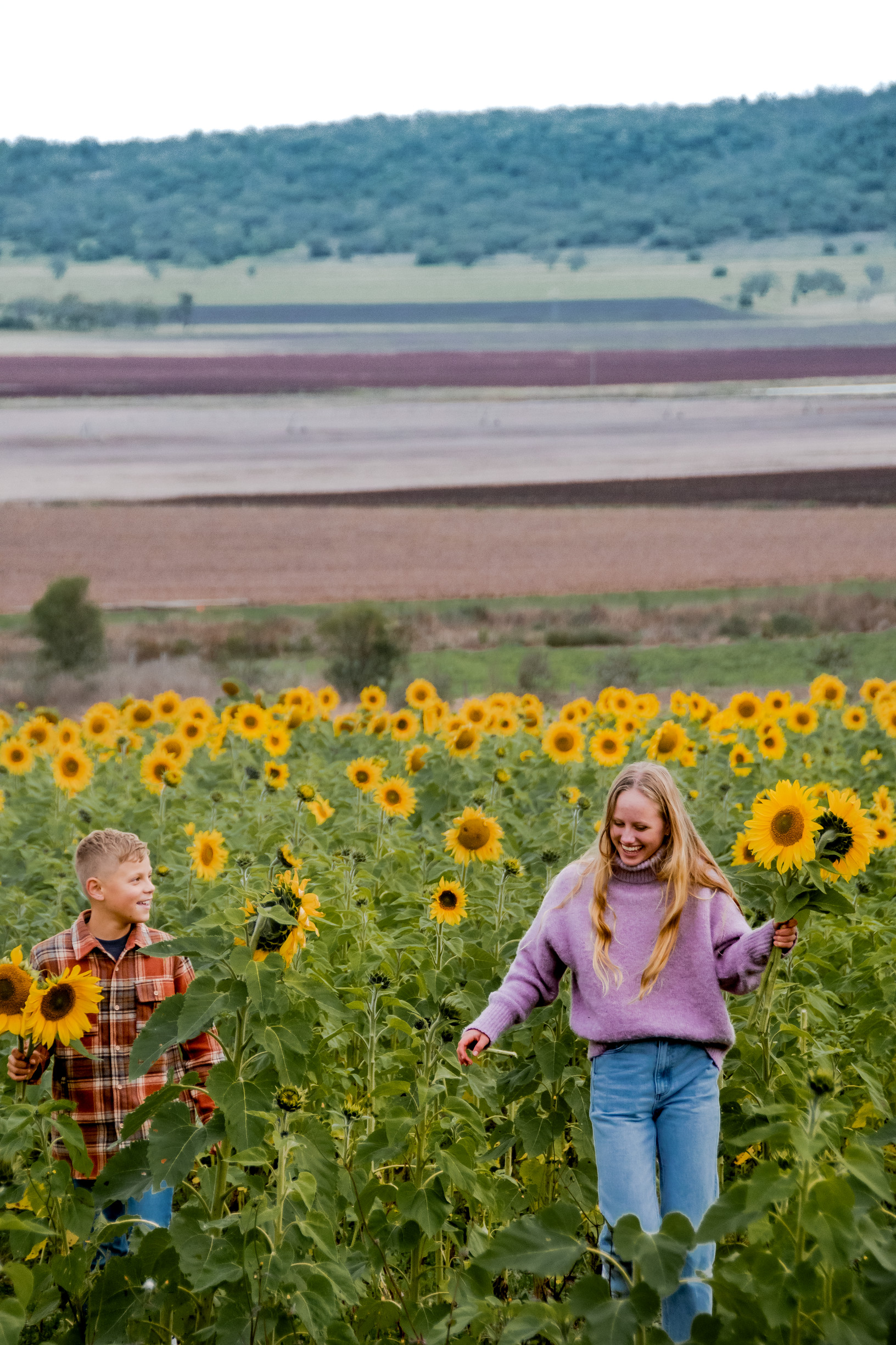
Warraba Sunflowers, Queensland Country

Queensland’s countryside around Scenic Rim and Queensland Country transforms into fields of gold during sunflower season – which normally bloom from January to March (though this is weather dependent).

Sunflower fields can be found throughout Nobby, Toowoomba, Warwick, Allora, Kalbar and Cambooya, and due to peak bloom often lasting just a week or two, it’s recommended to call the local tourism office before you head out to find out the best locations on the day. Get more tips here.

If you’re frolicking around Toowoomba, be sure to save time for a café-hop in town during the day. If you’re heading south to Allora, Warwick, or Kalbar, it’s a short, scenic detour to Kooroomba Vineyard and Lavender Farm, home to an award-winning restaurant, vineyard, lavender fields and a gift shop to pick up locally made skincare and goodies.

There's also Sunflowers on Kents in Kalbar, where you can take a leisurely stroll through the sunflowers, cut your own five stems or buy a pre-cut bunch to take home and enjoy. While you're there, enjoy a coffee or cool drink under the shade of marquees.

Time your visit for Kalbar Sunflower Festival (19 – 21 April 2024) when celebrations are in full swing with entertainment, chopper flights for a views over more than half a million sunflowers, long table lunches, cooking classes, art and even a 4-acre sunflower maze to explore.

How to get here: Sunflower spotting is a great excuse for a road trip, and the Sunflower Route between Toowoomba and Warwick is an avenue of yellow blooms that will lure you to pull over more than just once for a photo.

Stay a while: Make a weekend of it and spend a few days feasting your way through the Scenic Rim or Toowoomba.

Marvel at spring’s purple rain throughout Brisbane and the Gold Coast

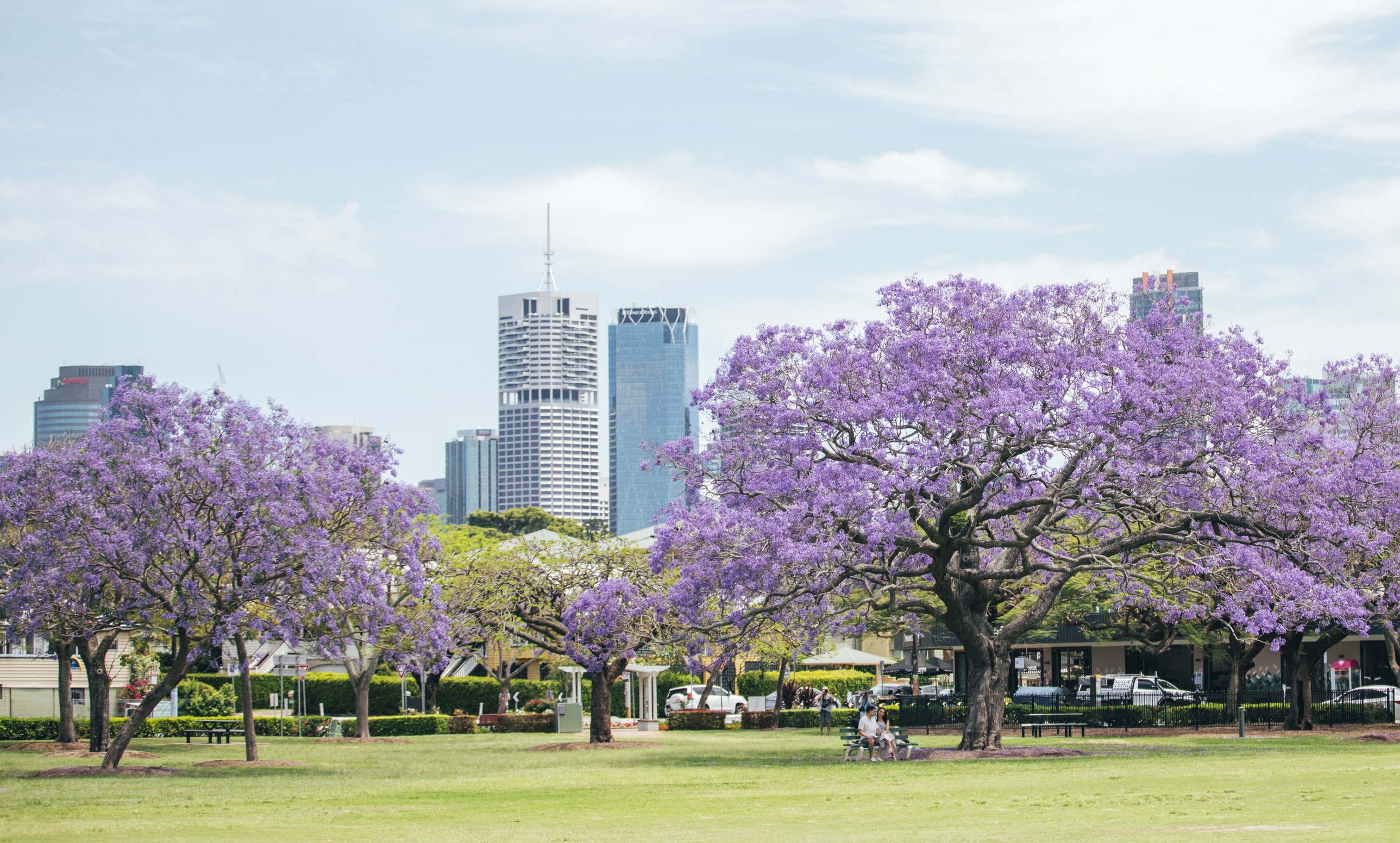
Jacarandas in New Farm Park, Brisbane

City streets and parks burst with colour during the annual jacaranda bloom - usually mid-September to November - popping from the treetops to the blanket of purple petals left at ground-level.

Some of the best jacaranda viewing can be done at Brisbane’s New Farm Park, University of Queensland’s St Lucia campus, Kangaroo Point and all the way south to Broadbeach Waters and Currumbin Valley – but the true beauty of jacaranda season is how even the quietest pockets of the city or suburban streets become encompassed in florals, bringing unexpected delight to any spring outing.

Cycle or stroll Brisbane City’s riverside to catch blooms along the way, or spend a Saturday morning in New Farm, picking up treats from the weekly Jan Powers Farmers Markets before throwing down the picnic blanket among the purple. Paired with a visit to a show or exhibition at Brisbane Powerhouse (and a wine at Bar Alto), you simply can’t go wrong.

How to get here: Brisbane’s riverfront jacarandas are best explored via the CityCat ferries – just tap your gocard as you board.

Stay a while: Base yourself in the city for a long weekend to soak up culture and spring blooms, and see how many iconic picnic spots you can take a break in. 

Hike among granite peaks and pretty blooms at Girraween National Park

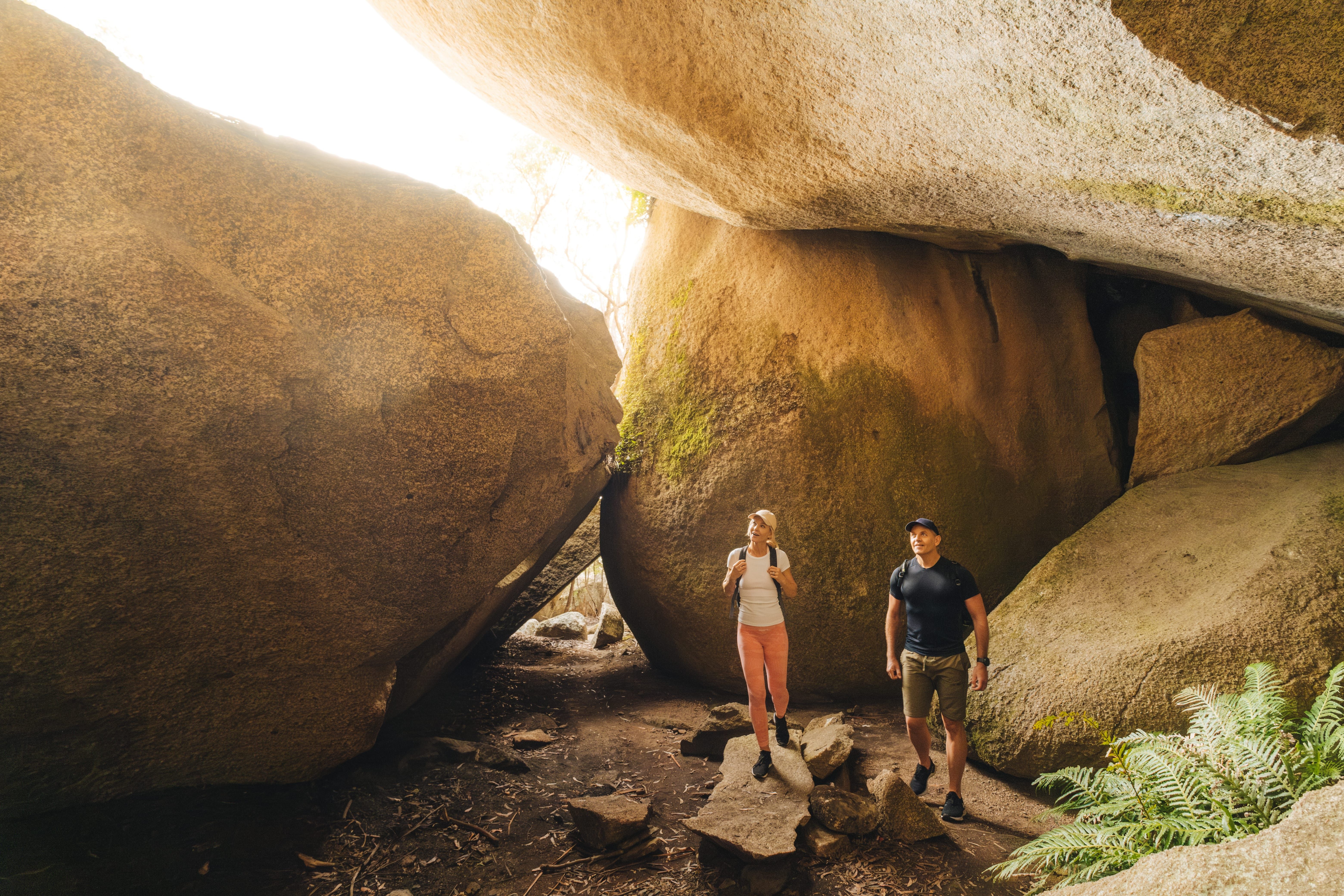
Mount Norman Trail, Girraween National Park

Each spring, wildflowers bloom among the ancient granite landscapes of Girraween National Park – so vibrant is makes sense to discover that the word ‘Girraween’ is Aboriginal for ‘place of flowers’.

This is one of South East Queensland’s most awe-inspiring hiking destinations, and visitors can hit the trails to take in sweeping views from the park’s many peaks and wander among a sea of wildflowers in bloom.

Make your way here in late July when golden wattle and pea flowers burst with colour, or wait until September and October when the most magnificent displays appear, the countryside bursting in white, yellow, purple and red native flowers. Among the many species include pink trigger plants, billy buttons, native bluebells, and native sarsaparilla. By November, summer welcomes flannel flowers, orchids, wattles, bottlebrushes, paperbarks and eucalypts.

The best tracks to take flower photos are along the easy Wyberba Walk, or the Bald Rock Creek circuit where wildflower displays feel artfully-placed among beautiful rock pools.

The Stanthorpe Rare Wildflower Consortium also offers several free guided walks each spring which must be booked in advance.

How to get here: Girraween National Park is around 3.5 hours’ drive from Brisbane. 

Stay a while: Combine wildflowers and wineries by exploring the Granite Belt’s best cellar doors, then cosy up in the region’s unique accommodations where you can sleep at a brewery, a winery, or even inside a wine barrel.

Experience a bloom in Munga-Thirri National Park (Simpson Desert) 

Wildflowers in the Simpson Desert, Outback Queensland

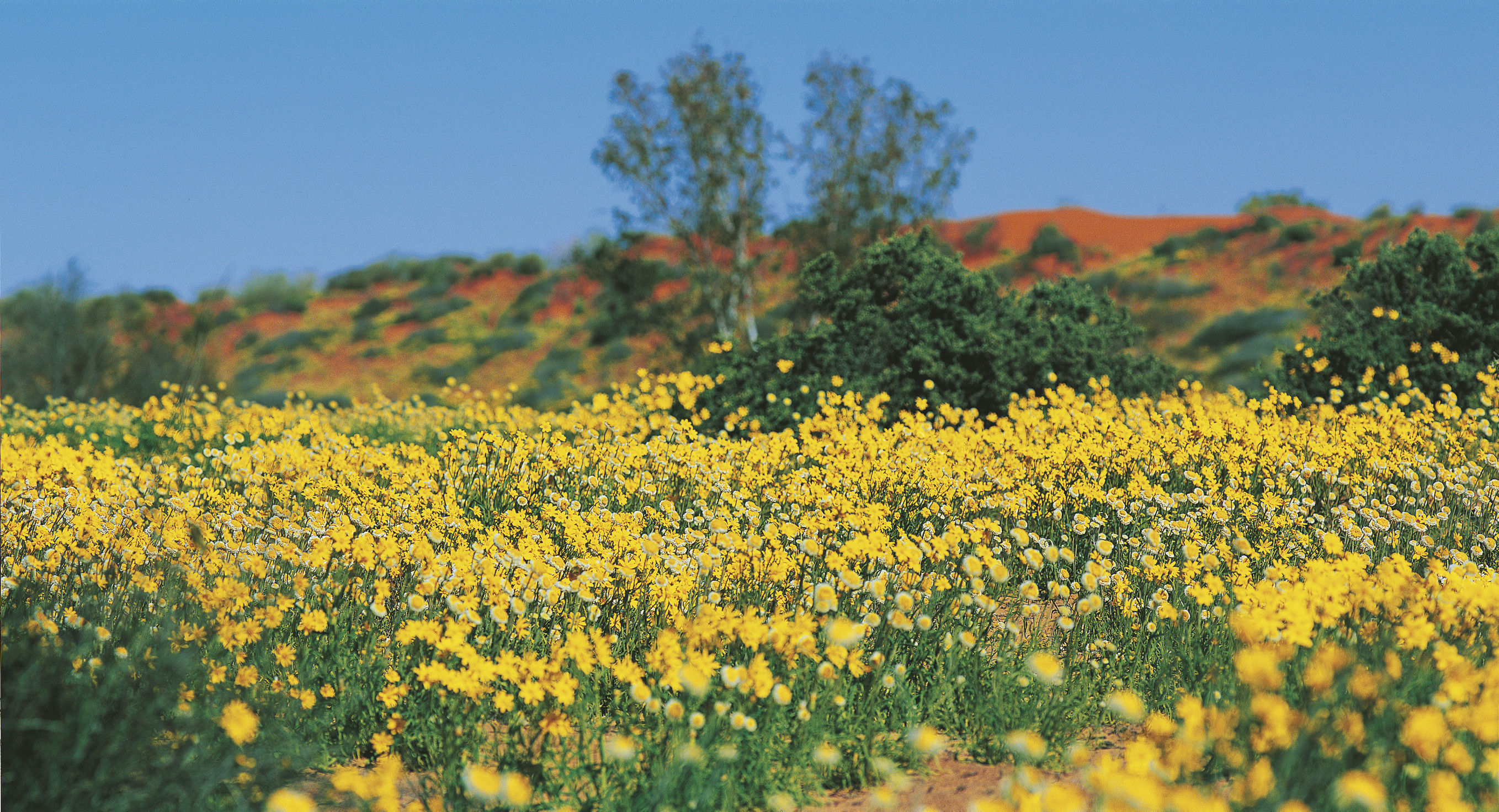
Outback Queensland might be known for its vast red dirt landscapes, but there’s nothing more spectacular than when rare rainstorms cover the expanse in millions of wildflowers.

Way out in our western reaches, Munga-Thirri National Park – aka the Simpson Desert – is known as the Holy Grail for 4WD adventures, with many intrepid travellers tackling the famous Birdsville Track each year. And while dry conditions are the norm out here, after a little rain this arid landscape becomes a haven for birds and wildflowers of all kinds, as red sand gives way to rolling dunes of poached egg daisies and vibrant yellow fleshy groundsel.

How to get here: Hit the road to Birdsville – but be prepared before you go. If you would rather have an expert guide on your desert odyssey, a number of commercial operators run Simpson tours, from chauffeured safaris to tag-along tours that allow you to drive yourself.

Stay a while: Spend a few days exploring Birdsville’s main attractions and discover these ways to soak up the spirit of the outback.

Wander the Banksia Track at Burrum Coast National Park

Banksia Track, Burrum Coast National Park. Photo by @crushmag_au

Strap on your walking boots and experience some of Australia's most distinctive flora and fauna as you walk the 5km Banksia Track near Bundaberg.

The track begins along a paperbark-lined boardwalk, which provides wheelchair access for 800 metres through melaleuca wetland. From here, it continues along for the full 5km where visitors can take in the sights, sounds and scents of mangrove-lined riverbanks, wallum heath, swamp banksia, wallum banksia, tea tree wetlands, eucalypt forests and spectacular wildflowers and bird life throughout August to October, when everything is in full bloom. Scarlet honeyeaters, king parrots and whipbirds add to the rainbow of colours, just a few of the 200 bird species spotted in the park.

How to get here: The Banksia Track trailhead is located a 45-minute drive from Bundaberg.

Stay a while: After you’ve got your fill of wildflowers, Woodgate Beach offers the ideal quiet beach getaway. If you’re hungry, Bundaberg’s vibrant farm trail and food scene is calling, while spring is the perfect time to stick around and have a Southern Great Barrier Reef adventure.

Discover a wildflower haven just moments from the Gold Coast’s beaches

Take advantage of a sunshine-fuelled day in late winter or early spring to steal a quiet moment in Pine Ridge Conservation Park, one of the last wallum remnant habitats on the Gold Coast. This area is culturally significant to the Kombumerri-Ngarangwal People, and visitors can explore the park’s varied plant life along the sealed boundary track (suitable for prams and wheelchairs) or explore the sandy track through the heart of the park.

Surrounded by banksia woodland, heath and paperbark swamp, wildflowers such as boronia and the wallum wedge pea are especially vibrant in years that receive good autumn rains. Bring your binoculars for birdwatching, and keep an eye out for koalas, bearded dragons, and lace monitors.

How to get here: Pine Ridge Conservation Park is an easy drive from Brisbane City or the Gold Coast and surrounding regions.

Stay a while: With the park located a stone’s throw from the sand, spend an early morning among the wildflowers then make your way to the beach to cool off, or take in more vibrant scenes at HOTA (Home of the Arts). When it’s time for a break, take it at a local café or brewery.

Road trip through Western Downs

Boobook Expore's wildflower tours in Gurulmundi. Photo by @boobookexplore

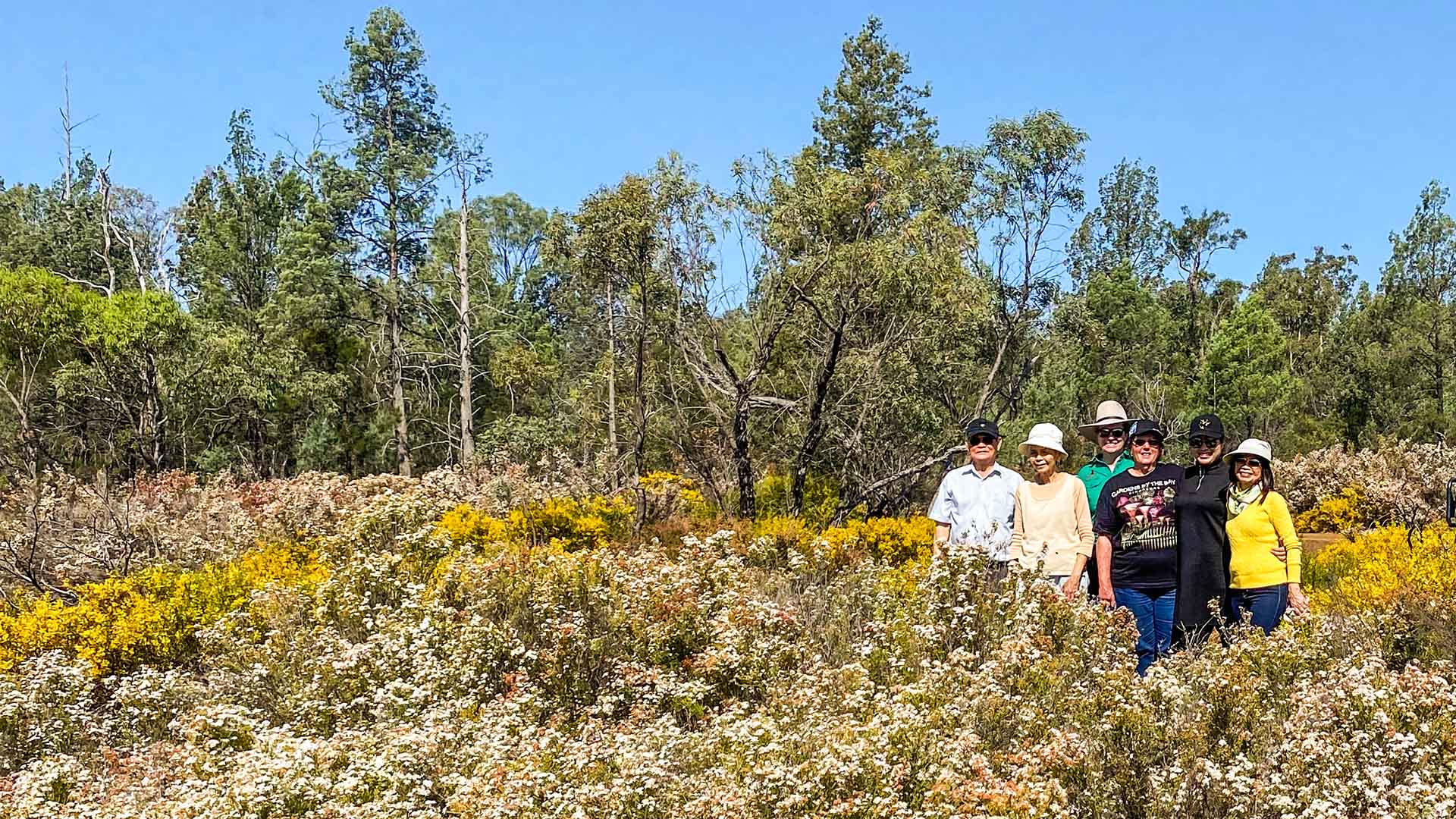
Want wide-open country vistas all to yourself? Venture on a self-drive wildflower tour through Miles and Gurulmundi in the Western Downs region, known as one of southern Queensland’s most significant wildflower hotspots and home to over 200 species of flora. These little towns might be tiny dots on the map, but there’s vast country to explore – just stop at Miles Visitor Information Centre for your step-by-step tour guide.

Best explored in late-August or early September (particularly after the first spring rains) and best tackled with a high-clearance 4WD or AWD, the many species of wildflowers that spring to life - including grevilleas, hakeas, wattles, bush peas and more - are viewed by travelling along unsealed and dirt roads. The official drive is just over 100km and takes around three hours to complete, so it’s an easily achievable day out.

If you prefer a local’s perspective, explore with Boobook Explore, a specialised tour group offering half day and full day wildflower tours. Your botanist guide will help you distinguish your grevilleas from your bush peas, and point out rare and threatened species like the Gurulmundi heath-myrtle that you might otherwise miss. It's a great opportunity to learn and be inspired by the beauty of the Aussie bush. Boobook Explore's air-conditioned mini-bus leaves from Roma and can also pick up at Jackson near Miles on the route.

Miles Historical Village Museum is recognised as one of Australia’s best historical villages so be sure to check it out while you’re here. Western Downs Motor Inn is a central spot to stay the night.

How to get here: Pack the car and prepare to wind your way along country roads. Miles is four hours’ drive from Brisbane.

Stay a while: Time your visit during Miles Back to the Bush Festival (7 – 10 September) when country spirit is on show with entertainment and friendly competition. Then, let the road lead you to your next adventure: head west to get a taste of the outback in Roma, or head east towards Kingaroy to taste country Queensland flavours from roadside peanut stands to local wineries.

Fan of all things floral? Mark your calendar for the Toowoomba Carnival of Flowers, held each September, where spectacular garden displays meet food festivals, arts, a country carnival and plenty of community spirit. 

Note for visitors: Tread carefully, visit respectfully and remember that wildflowers are best left wild and admired from a distance. Don’t trespass, don’t pick your own, and don’t walk among the flowers as this can damage fragile ecosystems.   

Bunji
Welcome to Queensland! ☀️ How can I help you?

Ready to ROAM?

Join our Queensland crew and get destination inspiration, insider tips, exclusive deals sent straight to your inbox. Let the exploring begin!

Sign up now
