
Where you can interact with dolphins in Queensland

LIST

Jamie Wilton

By Jamie Wilton

If you’re looking for amazing wildlife interaction experiences, Queensland should be at the top of your list. Not only does the Sunshine State deliver myriad whale watching opportunities from the Gold Coast up to the Southern Great Barrier Reef and Whitsundays, but there are also numerous opportunities to watch and interact with wild dolphins in their natural surroundings. 

While swimming with dolphins can be an immensely rewarding experience that provides memories for life, it’s so important to remember that these are wild animals and that our behaviour — feeding or interacting with them — can influence their behaviour. When looking for dolphin experiences in Queensland, be sure to book with a licensed tour operator that promotes minimal interference so that the amazing wildlife that we’re blessed with here in Queensland stays wild.

Queensland dolphin species 

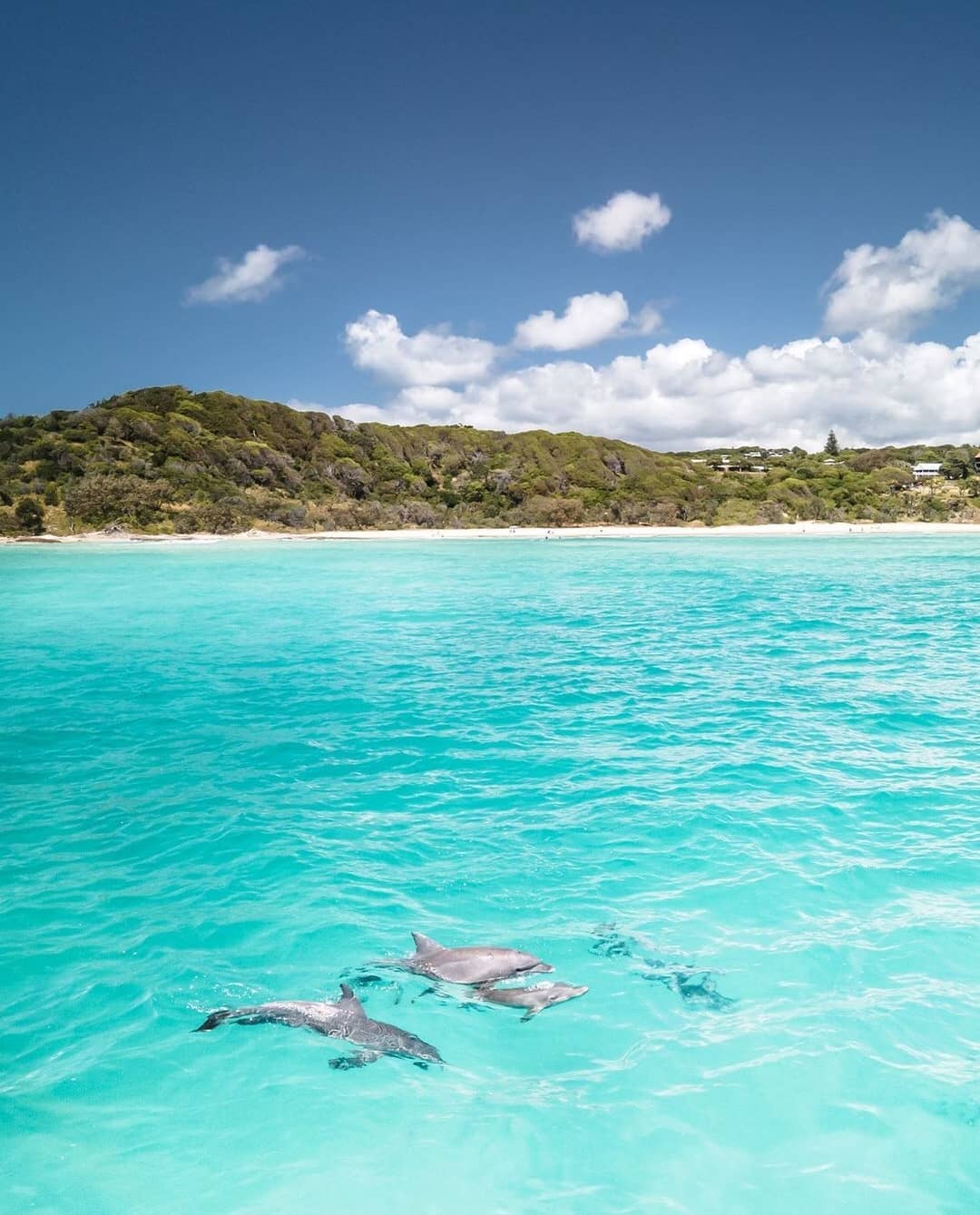
Photo by @tykeeling_

Three species of dolphins are found in Queensland’s coastal waters — the Indo-Pacific bottlenose, Indo-Pacific humpback and the Australian snubfin dolphin — with the Indo-Pacific bottlenose the most common. Spend some time on the Queensland coastline and you can often see these playful creatures riding the bow waves of tourist boats, ‘surfing’ breaks along the coast and feeding in coastal waters off rocky headlands.

Often confused with bottlenose dolphins, the Indo-Pacific humpback dolphin prefers shallow coastal waters, along with bays and the mouth of estuaries, and is less commonly seen in the wild. The Australian snubfin dolphin is even harder to catch a glimpse of in the wild and wasn’t described as a species until 2005. Closely resembling the Irrawaddy dolphin which is found in the Irrawaddy and Mekong Rivers in Southeast Asia and the Bay of Bengal, the Australian snubfin dolphin were originally thought to be an isolated Irrawaddy dolphin population but are actually the closest relative to the killer whale. The Australian snubfin dolphin is very distinctive in appearance with its lack of a beak, softly rounded head and small dorsal fin, and if you see one you certainly won’t forget it!

The larger common bottlenose dolphin also calls Queensland home but as it prefers deeper waters, there are fewer opportunities to witness these amazing mammals from the coastline. However, there are a number of bottlenose dolphin pods that frequent coastal waters and you’ll also find that there are many opportunities to see them at home in their deeper water native habitat by joining a tour.  

Tin Can Bay

For many years, Tin Can Bay has been home to a pod of humpback dolphins that have come to feed in the river and estuarine environment and Barnacles Dolphin Centre offers visitors the opportunity to interact with the pod every morning from 7am to 8am. To protect the dolphins and ensure everyone, both dolphins and humans, has an enjoyable experience, dolphin feeding at Tin Can Bay is closely regulated and monitored by the centre and a group of volunteers. The humpback dolphin pod is led by the alpha male, Mystique, who has been in the area since 1991. Tin Can Bay is about 210 kilometres north of Brisbane and is often combined with a holiday at Rainbow Beach.

Rainbow Beach 

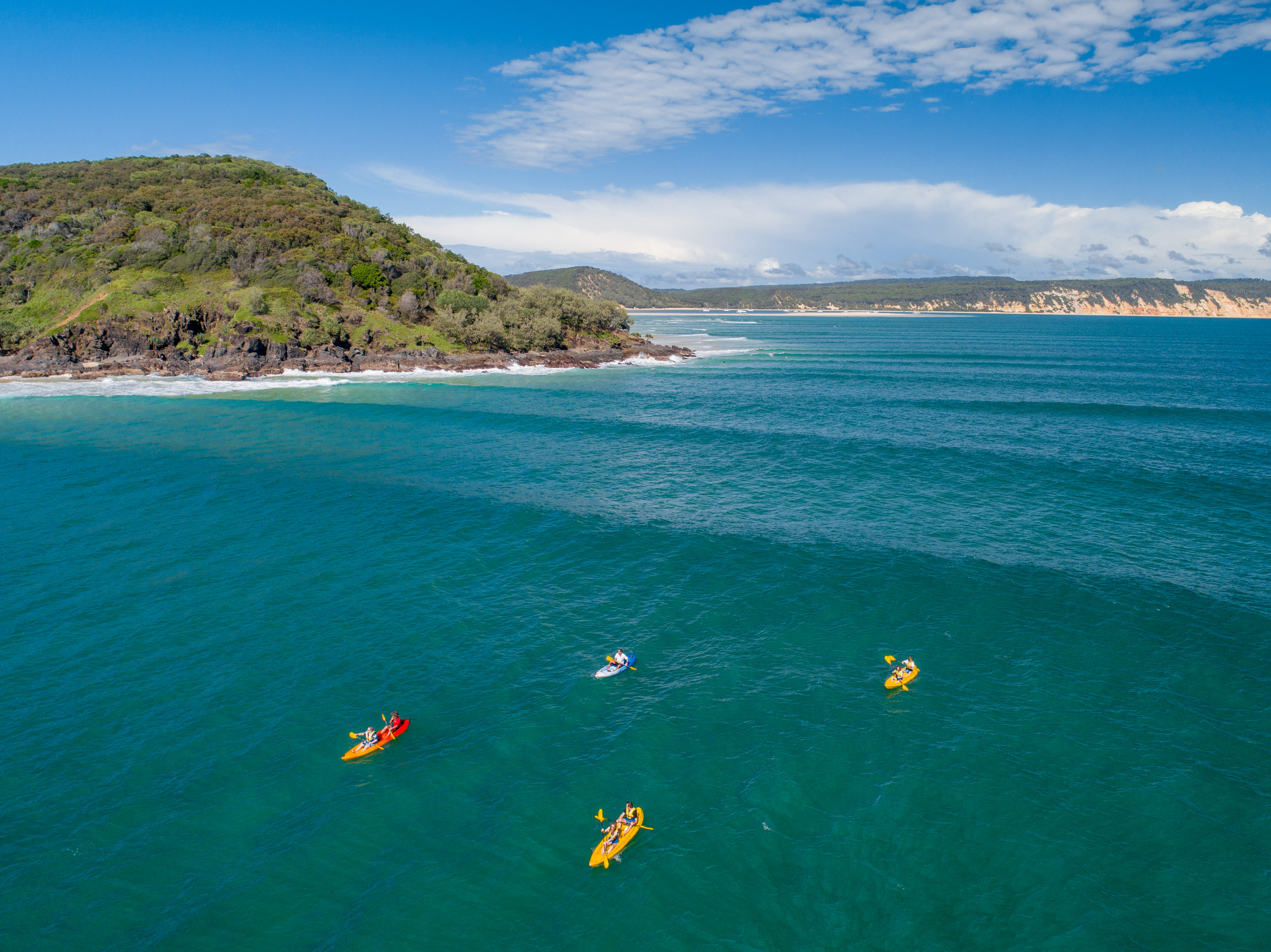
To see dolphins at Rainbow Beach, book a Dolphin View Kayak Tour with Epic Ocean Adventures Rainbow Beach and experience the amazing sights of Great Sandy National Park, including its myriad local sea life. With over 400 local bottlenose dolphins in the area, there’s a high chance you’ll see them playing in the coastal waters from your kayak and if you join a tour from June to November, you could also witness the sight of humpback whales on their annual migration to warmer waters.

Tangalooma Wrecks, Mulgumpin (Moreton Island) 

Wild Dolphin Feeding at Tangalooma Island Resort | Interact with dolphins in Queensland

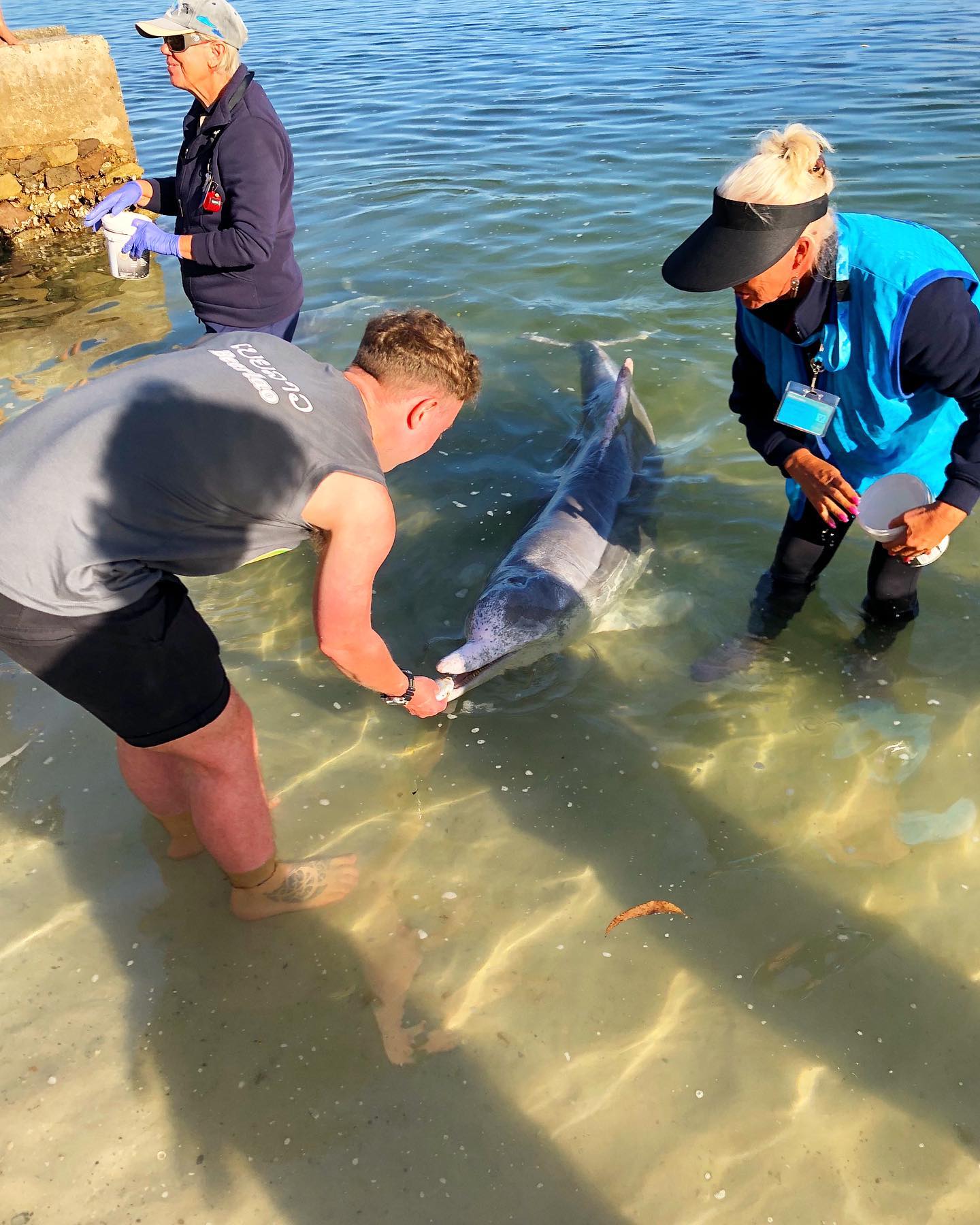
Home to around 600 bottlenose dolphins, Moreton Bay offers some impressive dolphin interaction experiences, including the wild dolphin feeding program at Tangalooma Island Resort. Operating each evening at sunset, the resort’s dolphin care team monitors their behaviour and interactions and runs the program to strict guidelines to ensure the protection of the dolphins. This includes feeding each dolphin just 10-20% of their daily food needs so they don’t become dependent and continue to hunt for themselves and survive on their own in the wild. You can hand-feed the dolphins, but as with other dolphin interaction tours, touching isn’t allowed as this could change their behaviour negatively. Also, when taking photos, be aware that flash photography is allowed from the pier but not the beach.

While only Tangalooma guests can participate in the Tangalooma dolphin feeding experience, if you’re staying on Moreton Island or join a day tour from Brisbane, you may spot dolphins while swimming, snorkelling or diving at the Tangalooma Wrecks on the western side of the island. 

Bunji
Welcome to Queensland! ☀️ How can I help you?

Ready to ROAM?

Join our Queensland crew and get destination inspiration, insider tips, exclusive deals sent straight to your inbox. Let the exploring begin!

Sign up now
